
A sewer line that backs up three times in one winter is no longer a clog problem. It is a structural problem, and structural problems need a structural fix. For many Treasure Valley homes, that fix is sewer excavation: digging down to expose a damaged sewer lateral (the private pipe running from your house to the city main) so a crew can repair or replace it. If you have already paid for repeated drain cleaning services and the backups keep returning, the pipe itself has likely failed. The decision you make next determines whether you spend once or keep paying for years.
At Plumber Service in Boise, we have dug, lined, and burst sewer lines from the North End to Nampa. This article shows you how to read the warning signs, compare open-trench, trenchless, and spot repair options, and budget for the real cost of the work in Idaho conditions.
Key Takeaways
- A camera inspection comes first. No honest contractor recommends digging until video footage shows a collapse, offset joint, belly, or root break.
- Trenchless is conditional, not automatic. Severe collapses, sagging bellies, and multiple lateral connections often require open-trench work or a targeted spot repair.
- Idaho ground conditions shape cost and timing. Hard winter freezes and spring snowmelt affect digging, compaction, and how long your yard takes to recover.
What Is Sewer Excavation?
Sewer excavation is the process of digging to expose a buried sewer pipe for direct repair or replacement. It gives our crew full, hands-on access to the line. That access matters when damage is too severe for pipe lining or pipe bursting to handle.
There are three main forms of the work:
| Method | What It Involves | Digging Required |
|---|---|---|
| Open-trench (open-cut) | Dig a continuous trench along the pipe, remove old pipe, lay new pipe | Full length of the damaged run |
| Spot repair | Dig one pit over a single failed section, replace only that section | One pit, about 4 to 8 feet long |
| Trenchless (lining or bursting) | Install a new pipe inside or through the old one | One or two small access pits |
Each method still involves some sewer excavation. The difference is how much ground gets opened. Ask any contractor which of these three methods they are quoting, and why, before you sign.
Warning Signs Your Sewer Line Needs More Than Cleaning

Repeated symptoms after a successful cleaning point to a broken pipe. A clean line that clogs again within weeks is telling you something cleaning cannot fix. Our plumbers frequently see this pattern in older North End Boise homes with original clay pipe.
Watch for these signs:
- Multiple drains backing up at the same time, especially lower-level fixtures
- Gurgling toilets when the washer or shower drains
- Sewage odor in the yard or basement
- Soggy patches or lush green strips in the lawn above the sewer path
- Sinkholes or settling along the line between the house and street
- Recurring root clogs every 6 to 12 months
- Rodent or insect activity near cleanouts or foundation cracks
On recent service calls in Meridian, we traced a homeowner’s “mystery” yard depression straight to a cracked lateral leaking into the soil. The lawn told the story before the drains did. If you see two or more of these signs, schedule a camera inspection before the next backup forces an emergency call.
When Excavation Is Required vs. When Trenchless Works
The type of damage decides the method, not the contractor’s preference. Trenchless methods save landscaping, but they need a pipe that is still mostly round and properly sloped. Open-trench work handles the failures trenchless cannot.
Sewer Damage Types and Recommended Methods
| Damage Found on Camera | What It Means | Recommended Method |
|---|---|---|
| Root intrusion at joints (pipe intact) | Roots enter through gaps but the pipe holds shape | Hydro jetting, then CIPP lining |
| Hairline cracks along the run | Pipe weakened but still round | CIPP lining |
| Single collapsed section | One area crushed, rest of line sound | Spot repair excavation |
| Full-length collapse | Pipe failing along most of its run | Open-trench replacement |
| Belly (sag) holding water | Section sank below grade, traps waste | Open-trench or spot repair to restore slope |
| Severe offset joints | Pipe sections shifted out of line | Spot repair or open-trench |
| Orangeburg pipe (any condition) | Tar-paper pipe deforming with age | Pipe bursting or open-trench |
| Multiple tie-ins or wyes | Several connections along the lateral | Open-trench for proper reconnection |
A belly (a low spot where pipe has settled below the correct grade) is one of the most common reasons trenchless fails. A liner follows the old pipe’s shape. It cannot lift a sag back into proper slope.
Open-Trench Excavation: Pros and Cons
Pros:
- Full visual access to the entire pipe
- Corrects slope, bellies, and offsets permanently
- Works on any pipe material or damage level
- Allows new cleanouts and proper bedding
Cons:
- Most disruption to lawns, driveways, and hardscape
- Longer timeline, often 2 to 5 days plus restoration
- Higher restoration costs under concrete
CIPP Lining: Pros and Cons
CIPP (cured-in-place pipe) is a resin-soaked liner that hardens inside the old pipe to form a new, jointless wall.
Pros:
- Minimal digging, usually one or two access points
- Often completed in one day
- Jointless and root-resistant
Cons:
- Will not fix bellies or full collapses
- Slightly reduces pipe diameter
- Needs a clean, mostly round host pipe
Pipe Bursting: Pros and Cons
Pipe bursting pulls a new HDPE pipe (high-density polyethylene) through the old line while a bursting head fractures the old pipe outward.
Pros:
- Full replacement with minimal trenching
- Can upsize pipe diameter
- Ideal for brittle clay and Orangeburg
Cons:
- Requires access pits at both ends
- Not suited to severe offsets or tight bends
- Can disturb nearby utilities in crowded easements
Spot Repair: Pros and Cons
Pros:
- Lowest cost when damage is isolated
- Small dig footprint
- Leaves sound pipe untouched
Cons:
- Does not address aging pipe elsewhere in the run
- Repeat failures possible in older systems
Ask to see the footage for every damage point before agreeing to a method. The video is the evidence.
The Sewer Excavation Process, Step by Step
A properly run dig follows the same seven steps every time. Skipping any of them leads to cost overruns, failed inspections, or a trench that settles next spring.
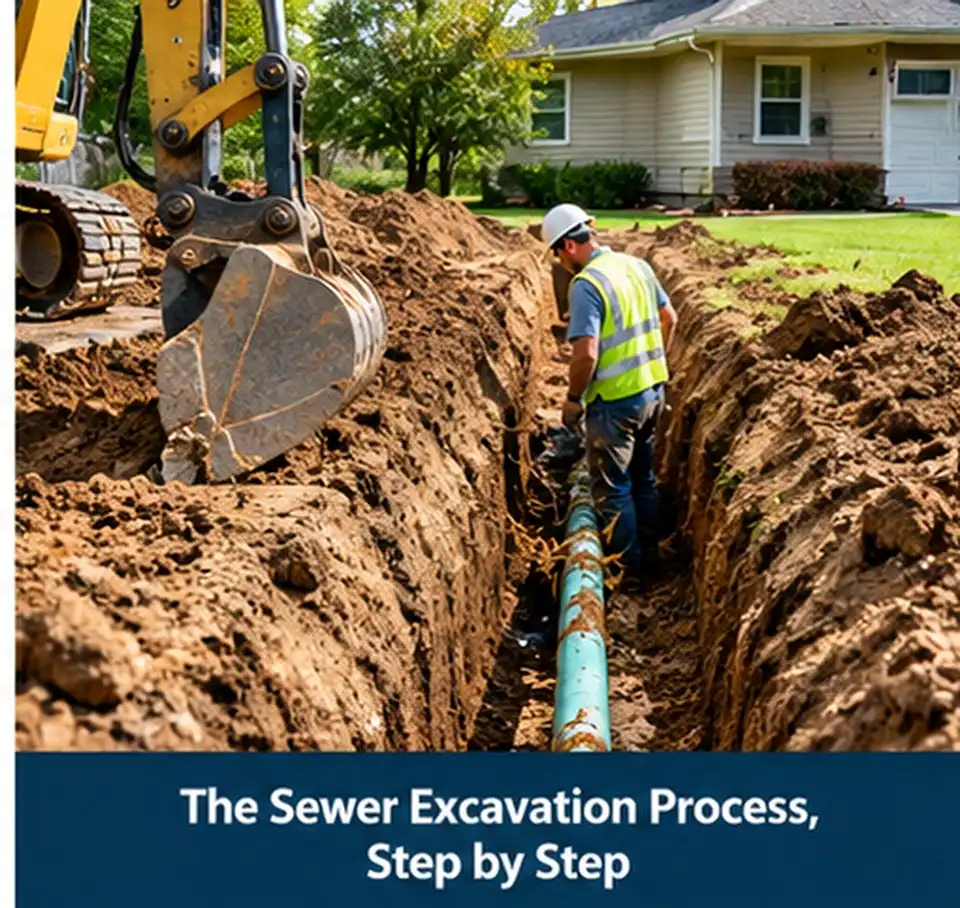
Here is how we run each project at Plumber Service Boise.
- Run a camera inspection. We send an HD camera down the line to locate the failure, measure its distance from the cleanout, and check the condition of pipe on either side.
- Locate the pipe and its depth. A sonde transmitter on the camera head lets us mark the exact path and depth of your lateral from the surface.
- Call 811 for utility locating. Idaho law requires at least two business days’ notice through Digline before any excavation, so gas, power, water, and telecom lines get marked.
- Pull the permit. Sewer lateral work needs a plumbing permit from the City of Boise or the Idaho Division of Building Safety, depending on your jurisdiction.
- Excavate safely. Trenches 5 feet or deeper require OSHA-compliant protection such as shoring, sloping, or trench boxes.
- Repair or replace the pipe. We install new PVC or HDPE pipe on compacted bedding at the correct slope, then pass the required inspection before burial.
- Backfill, compact, and restore. Soil goes back in lifts (layers) with mechanical compaction to prevent future settling, followed by agreed surface restoration.
Typical Timeline by Phase
| Phase | Typical Duration | Who Handles It |
|---|---|---|
| Camera inspection and diagnosis | 1 to 2 hours | Plumber |
| Digline utility locating | 2 business days minimum | Utility locators |
| Permit approval | 1 to 5 business days | Plumber and city |
| Excavation | 4 hours to 2 days | Plumbing crew |
| Pipe repair or replacement | 4 hours to 1 day | Licensed plumber |
| City inspection | Same day to 1 day | Municipal inspector |
| Backfill and compaction | 2 to 6 hours | Plumbing crew |
| Surface restoration | 1 day to several weeks | Crew or landscaper |
The inspection step often reveals more than the sewer. On a recent North End job, the open trench exposed a corroded galvanized water service running right beside the sewer. Combining both repairs in one dig saved the homeowner a second excavation. If your home needs broader pipe repair and replacement, plan it alongside the sewer work. One trench costs less than two.
What Sewer Excavation Costs in Boise
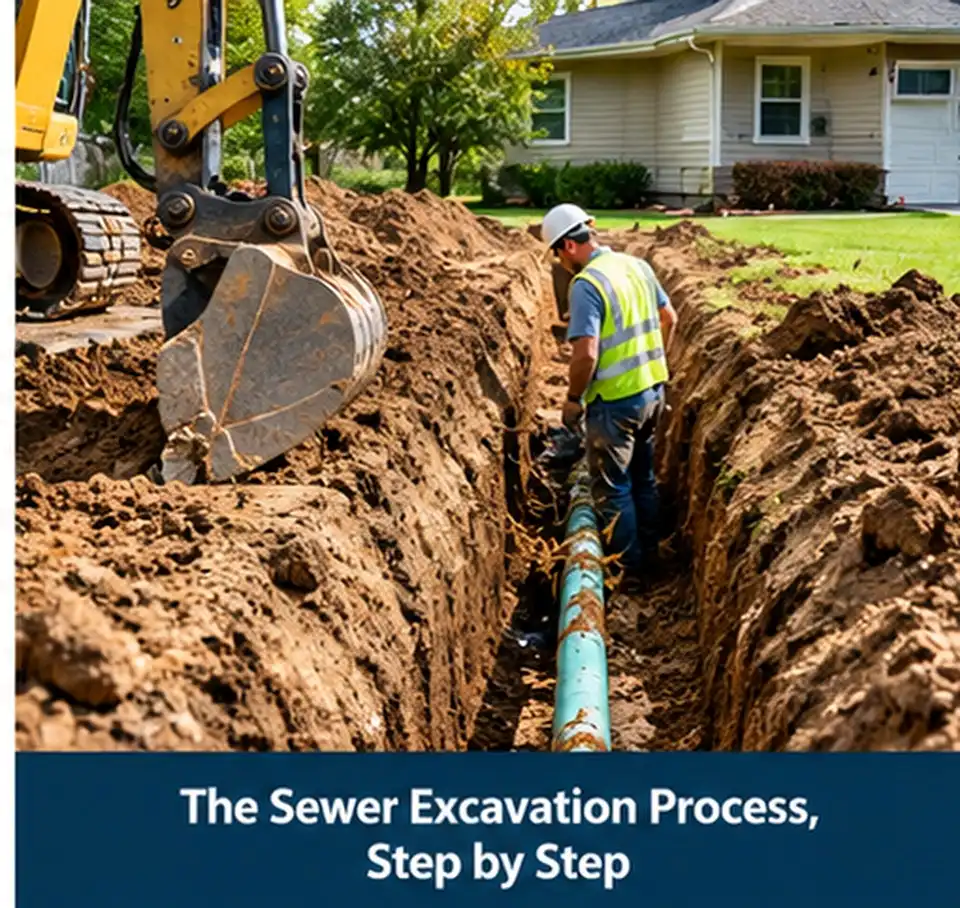
Depth, length, and surface type drive the price more than anything else. A 40-foot run under grass costs far less than the same run under a stamped concrete driveway. Typical sewer excavation costs for Treasure Valley homes fall into the ranges below.
Cost Comparison: Open-Trench vs. Trenchless vs. Spot Repair
| Method | Typical Boise Cost Range | Best For | Average Project Time |
|---|---|---|---|
| Camera inspection | $150 – $350 | Diagnosis before any repair | 1 to 2 hours |
| Spot repair (single section) | $1,500 – $5,000 | One isolated break or belly | 1 day |
| CIPP lining (50-80 ft) | $3,000 – $8,000 | Cracks, root intrusion, intact shape | 1 day |
| Pipe bursting | $6,000 – $12,000 | Full replacement, brittle pipe | 1 to 2 days |
| Open-trench replacement | $5,000 – $15,000+ | Collapse, bellies, multiple tie-ins | 2 to 5 days |
| Concrete or asphalt restoration | $15 – $30 per sq. ft. | Driveways, sidewalks, patios | 1 to 3 days |
These are planning ranges, not quotes. Your actual price depends on the site conditions we confirm during inspection.
Factors That Raise or Lower Your Cost
| Cost Factor | Lower Cost | Higher Cost |
|---|---|---|
| Pipe depth | Under 4 feet | Over 8 feet (shoring required) |
| Run length | Under 40 feet | Over 100 feet |
| Surface above pipe | Lawn or gravel | Concrete, pavers, mature trees |
| Soil type | Sandy loam | Rocky soil, caliche, or groundwater |
| Access | Open side yard | Under additions, decks, or tight lots |
| Season | Late summer, early fall | Deep winter freeze, spring saturation |
| Connection point | Lateral ends at property line | Tie-in under the street |
Ask for restoration to be written into your estimate. Grass reseeding, sod, sprinkler repair, and concrete replacement should each appear as line items.
Repair or Replace: How to Decide
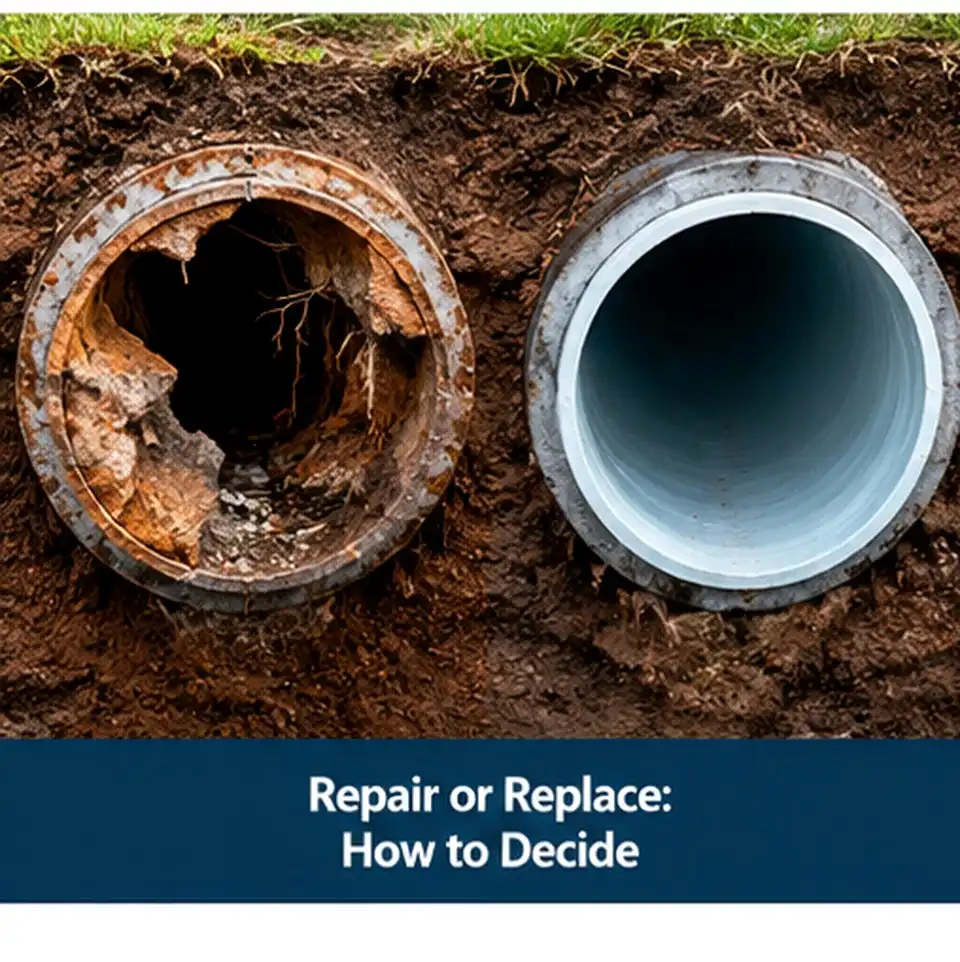
Replace the whole line when damage repeats along its length. Repair one section when the rest of the pipe is sound. The camera footage, pipe age, and material make the call clear.
| Situation | Repair | Replace |
|---|---|---|
| One break, rest of pipe in good shape | ✔ | |
| Pipe under 30 years old, isolated damage | ✔ | |
| Clay or cast iron over 60 years old | ✔ | |
| Orangeburg pipe present anywhere | ✔ | |
| Three or more damage points on camera | ✔ | |
| Repeated root clogs after cleaning | ✔ | |
| Planning a remodel or home sale | ✔ | |
| Budget limited, damage confined | ✔ |
Our rule of thumb is simple: if repair costs exceed 50% of a full replacement, replace the line. You avoid paying for a second dig in five years.
Sewer Pipe Materials and Expected Lifespan
Pipe material predicts how and when your sewer will fail. Boise’s housing stock spans more than a century, so we see every material on this list. Older North End, East End, and Boise Bench homes often still run on original clay or cast iron.
| Pipe Material | Common Install Era | Expected Lifespan | Common Failure in Idaho |
|---|---|---|---|
| Vitrified clay | Pre-1970s | 50 – 60+ years | Root intrusion at joints, cracking from freeze-thaw |
| Cast iron | Pre-1980s | 50 – 75 years | Internal corrosion, scaling, cracks |
| Orangeburg (bituminous fiber) | 1940s – 1970s | 30 – 50 years | Deforming, blistering, collapse |
| ABS plastic | 1970s – 1990s | 50 – 70 years | Joint separation, sun-damaged sections |
| PVC | 1970s – present | 70 – 100+ years | Rare; settling or belly from poor bedding |
| HDPE (from bursting) | 2000s – present | 50 – 100 years | Rare when installed correctly |
| CIPP liner | 2000s – present | 50+ years | Rare; poor curing or bad host pipe prep |
If you have dealt with frozen pipes in Idaho, you already understand the risk to clay. Water seeps into joint gaps, freezes, expands, and widens the crack each winter. Tree roots find those gaps by spring. That cycle repeats until the pipe fails.
How Idaho Seasons Affect Your Excavation

Ground conditions change the cost, pace, and quality of every dig. Boise’s semi-arid climate brings hard freezes and a wet spring melt. Both affect how a trench opens and how backfill settles.
| Season | Ground Conditions | Impact on Excavation | Our Approach |
|---|---|---|---|
| Winter (Dec – Feb) | Frozen topsoil, frost 1 to 2+ feet deep | Slower digging, harder compaction | Ground thawing, heavier equipment, emergency-only scheduling |
| Spring (Mar – May) | Snowmelt saturates soil, high groundwater | Trench walls less stable, dewatering possible | Extra shoring, pumps, compaction testing |
| Summer (Jun – Aug) | Dry, firm soil | Fastest digging, easiest compaction | Ideal for planned replacements |
| Fall (Sep – Nov) | Firm soil, cooler temps | Good conditions, lawn recovers before winter | Best window for scheduled projects |
Sewer excavation in winter is possible, and we do it when a line fails outright. Planned work goes smoother from late summer through fall. Grass reseeded in September roots in before the first freeze.
Treasure Valley soil shifting adds another factor. Expansive clay soils in parts of Nampa and Caldwell swell when wet and shrink when dry. That movement can push joints out of line over time, creating offsets and bellies. Proper bedding gravel under new pipe absorbs that movement.
Why DIY Sewer Excavation Is a Bad Idea
DIY sewer excavation risks injury, utility strikes, and code violations. Renting a mini excavator looks cheap on paper.

The real costs show up later.
- Trench collapse: A cubic yard of soil weighs roughly 3,000 pounds. Unprotected trench walls can collapse without warning.
- Utility strikes: Hitting a gas or power line causes fires, outages, and liability for repair costs.
- Failed inspections: Unpermitted sewer work can block a home sale or insurance claim.
- Wrong slope: Sewer pipe needs about 1/4 inch of fall per foot. Too little or too much creates new clogs.
- Foundation damage: Digging near footings can undermine your home’s support.
- Poor compaction: Loose backfill settles into ruts and sinkholes within a year.
Leave the digging to a licensed crew. Spend your energy on the planning steps below instead.
Pre-Excavation Checklist for Homeowners
Preparation shortens the project and protects your property. Work through this list once your estimate is approved.
- Review the camera footage and confirm the failure location
- Confirm the lateral ownership boundary with your city or sewer district
- Get the estimate in writing, including restoration line items
- Verify the contractor’s Idaho plumbing license and insurance
- Confirm who pulls the permit and schedules the inspection
- Mark sprinkler lines, invisible pet fences, and landscape lighting
- Move vehicles, patio furniture, and planters from the work zone
- Plan for water-use limits during the tie-in window
- Ask about warranty terms for both pipe and workmanship
- Check your homeowner’s policy for service line coverage
Hand this list to your contractor at the first meeting. A good one will already have answers for every line.
Using Less Water After Your Sewer Repair
Every gallon you send down the drain travels through your new lateral. Lower flow volumes put less stress on the system and lower your utility bill. Boise’s sewer charges are tied to water use, so efficiency pays off twice.
Replacing old toilets, faucets, and showerheads with labeled fixtures is the fastest win. EPA WaterSense labeled toilets use 1.28 gallons per flush or less, compared to 3.5 gallons or more for many pre-1994 models. Those savings add up quickly in a family home.
| Fixture | Older Model Usage | WaterSense Labeled Usage |
|---|---|---|
| Toilet | 3.5+ gallons per flush | 1.28 gallons per flush or less |
| Showerhead | 2.5+ gallons per minute | 2.0 gallons per minute or less |
| Bathroom faucet | 2.2 gallons per minute | 1.5 gallons per minute or less |
Pair your sewer repair with a fixture upgrade while the crew is already on site.
FAQs
How long does sewer excavation take?
Most residential projects take 1 to 5 days of on-site work. Spot repairs often finish in one day. Full open-trench replacements take longer, and permits plus Digline locating add several business days before digging starts.
Who owns the sewer line in Boise?
Homeowners typically own the lateral from the house to the city main. The exact boundary depends on your city or sewer district. Some end at the property line, while others extend to the main under the street. Confirm before work begins.
Can a sewer line be repaired without digging?
Yes, if the pipe is still round and properly sloped. CIPP lining and pipe bursting both need only small access pits. Collapses, bellies, and severe offsets still require excavation.
What should I do if my sewer backs up before the repair is scheduled?
Stop using water and call for help immediately. A diagnosed line can still back up at any time. Our emergency plumbing services run 24/7 to clear the blockage and contain the mess until the permanent fix is in place.
Does homeowners insurance cover sewer line replacement?
Standard policies usually exclude wear, age, and root damage. Some insurers offer a service line endorsement for a small added premium. Water damage inside the home from a sudden backup may be covered separately.
How do I know if I need a camera inspection first?
You need one before any repair over a few hundred dollars. Footage confirms the problem, its location, and the right method. Schedule a sewer line inspection if you have repeat clogs, odors, or soggy yard spots.
Will my yard look the same after excavation?
It will with proper compaction and agreed restoration. Lawns typically recover in 4 to 8 weeks after seeding or sod. Concrete and pavers can be matched closely, though a seam is usually visible.
Final Thoughts: Dig Once, Dig Right
The right method starts with evidence, not guesswork. A camera inspection shows what failed, where, and why. That footage tells you whether you need open-trench work, trenchless replacement, or a single spot repair.
Boise’s freeze-thaw winters, spring melt, and aging clay pipe make sewer problems a matter of when, not if, for many older homes. Plan major work for late summer or fall when you can. Get restoration written into your estimate. And check your other aging systems while the ground is open.
If your project also involves upgrading equipment inside the house, ask us about water heater installation so both jobs share one schedule and one crew. At Plumber Service Boise, we give you transparent pricing, clear explanations, and work that holds up through every Idaho winter.
Your next step: call Plumber Service Boise to book a camera inspection and get a written, line-item estimate before the next backup.