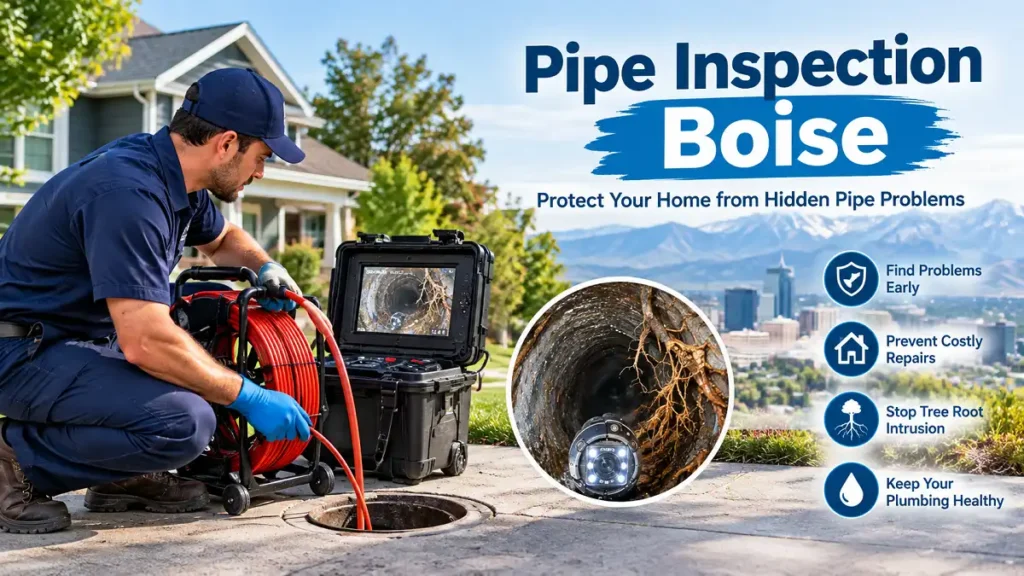
The most expensive plumbing problems in Boise are buried, silent, and years in the making. By the time sewage backs into a basement floor drain, a cracked clay line or root-choked joint has usually been failing for a long time. A professional pipe inspection puts a camera where your eyes can’t go, so you can find the problem while it’s still a small, planned repair and not a weekend disaster. That difference often shows up as thousands of dollars on your final bill. It also keeps you from needing our emergency plumbing services at 2 a.m. in January.
Key Takeaways
- Camera inspections find root intrusion, cracks, bellies, and mineral buildup before they cause backups, often without any digging.
- Older Boise homes (25+ years) and any home you plan to buy should get a sewer line scope. Homes with recurring clogs need one now.
- A $150-$400 inspection can prevent a $5,000-$20,000+ sewer replacement by targeting the exact problem spot.
What Is a Professional Pipe Inspection?
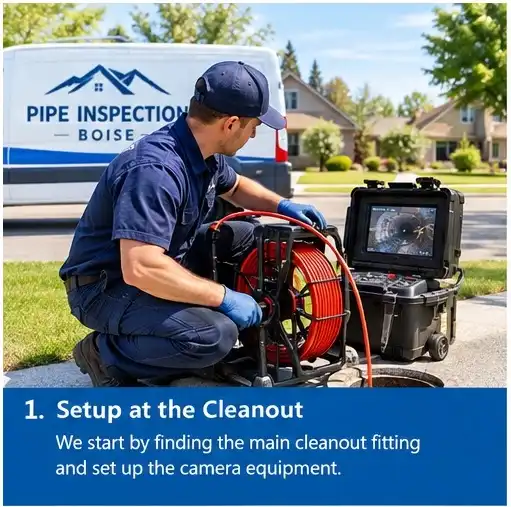
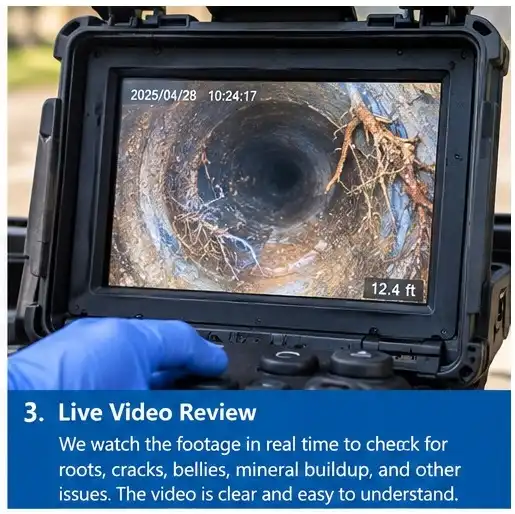
A professional pipe inspection uses a waterproof, high-resolution camera on a flexible cable to record the inside of your drain and sewer lines in real time. We usually enter through a cleanout fitting, so there’s no digging. The camera head also carries a locator transmitter, which lets us mark the exact spot and depth of any problem from the surface.
You get video, not guesswork. We walk you through the footage and explain what we see in plain language.
Types of Inspections We Perform
| Inspection Type | What It Checks | Best For |
|---|---|---|
| Sewer Line Camera Scope | Main line from house to city connection | Home purchases, backups, older homes |
| Interior Drain Camera | Kitchen, bath, and floor drain branches | Recurring slow drains in one area |
| Water Line Leak Detection | Pressurized supply lines (acoustic/pressure testing) | High water bills, damp slabs, low pressure |
| Visual Supply Line Check | Exposed pipes in crawlspaces, basements, utility rooms | Corrosion, galvanized pipe, frost risk |
| Post-Repair Verification | Confirms repairs sealed and flow is restored | After spot repairs or lining |
Why Boise Homes Face Unique Pipe Risks
Boise plumbing deals with a specific mix of stresses: hard water, mature trees, aging pipe materials, and harsh winters. Each one damages pipes differently. Together, they explain why we recommend inspections more often here than in milder climates.
Hard Water and Mineral Buildup
Much of the Treasure Valley has moderately hard to hard water. Over time, calcium and magnesium scale coats pipe walls and narrows flow. In drain lines, scale grabs grease and soap residue, which builds into stubborn blockages. A narrowed pipe can look fine from the sink but be half-closed inside.
Tree Root Intrusion
Our plumbers frequently see this in older North End Boise homes. Large silver maples, elms, and cottonwoods send roots toward the moisture and nutrients leaking from clay pipe joints. Once inside, roots grow into a dense mat that catches everything flowing past. Snaking clears them for a while, but they come back stronger.
Aging Clay, Cast Iron, and Galvanized Pipe
Many homes built before the 1970s still have vitrified clay sewer lines, cast iron drains, or galvanized steel supply lines. These materials weren’t bad in their day. They’re just near or past their expected lifespans now. A pipe inspection tells you which material you have and how much life it has left.
Freeze-Thaw Cycles and Soil Movement
If you’ve dealt with frozen pipes in Idaho, this plumbing strategy makes complete sense. Boise’s frost depth is 24 inches minimum below grade. Shallow lines, crawlspace pipes, and hose bibs are all exposed. Repeated freezing and thawing shifts soil, which pulls joints apart and creates offsets and bellies (sagging sections that hold standing waste). Pockets of clay-heavy soil in parts of the valley swell when wet and shrink when dry, adding even more stress. These shifts rarely cause instant failure, so they go unnoticed for years.
Boise Risk Factors at a Glance
| Risk Factor | What It Does to Pipes | Where We See It Most |
|---|---|---|
| Hard water | Scale buildup, reduced flow, fixture wear | Valley-wide |
| Tree roots | Joint intrusion, blockages, cracks | North End, East End, Hyde Park, older Meridian streets |
| Aging materials | Corrosion, collapse, leaking joints | Pre-1975 homes across Boise and Nampa |
| Freeze-thaw | Burst pipes, separated joints, offsets | Crawlspaces, exterior walls, shallow lines |
| Clay soil movement | Bellies, misalignment, cracked lines | Pockets throughout Ada and Canyon Counties |
Warning Signs Your Pipes Need a Camera
On recent service calls in Meridian, homeowners told us they’d been living with slow drains for months before calling. Most early warning signs are subtle, but they almost always point to a hidden cause. Use this table to match what you notice to what’s likely happening.
| Warning Sign | Likely Cause | Urgency |
|---|---|---|
| Multiple slow drains at once | Main sewer line blockage or belly | High |
| Gurgling toilets or drains | Venting issue or partial line obstruction | Medium |
| Sewage odor indoors or in the yard | Cracked line, dry trap, or leaking joint | High |
| Clogs that return after snaking | Root intrusion, scale, or damaged pipe | High |
| Lowest-floor drains backing up | Main line blockage | Urgent |
| Unusually green, lush grass patch | Sewer line leak feeding the lawn | Medium |
| Water bill spike with no usage change | Hidden supply line leak | Medium |
| Rust-colored water | Corroding galvanized pipe | Medium |
| Foundation cracks or soggy yard spots | Leaking line and soil erosion | High |
One symptom is a clue. Two or more together is a strong reason to call.
Our Pipe Inspection Process, Step by Step
At Plumber Service Boise, we keep the process simple, transparent, and non-invasive. Here’s exactly what happens during a typical visit.
1. Talk through your symptoms.
We ask about clogs, odors, backups, and the age of your home. This tells us where to start.
2. Locate an access point.
Most homes have an exterior or basement cleanout. If there isn’t one, we can pull a toilet or recommend installing a cleanout for future service.
3. Run the camera.
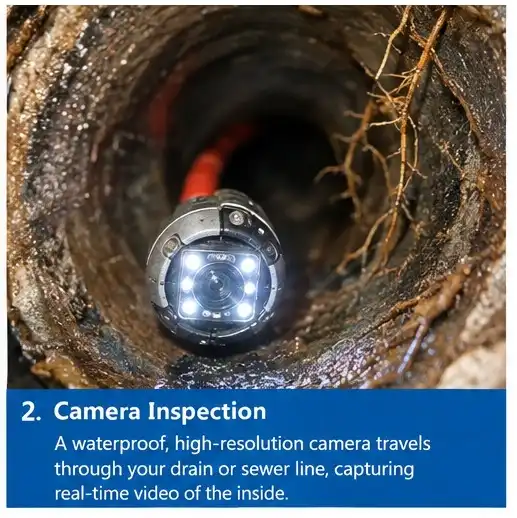
We feed the waterproof camera through the line and watch live video. We look for roots, cracks, offsets, bellies, scale, and grease buildup.
4. Pinpoint problem spots.
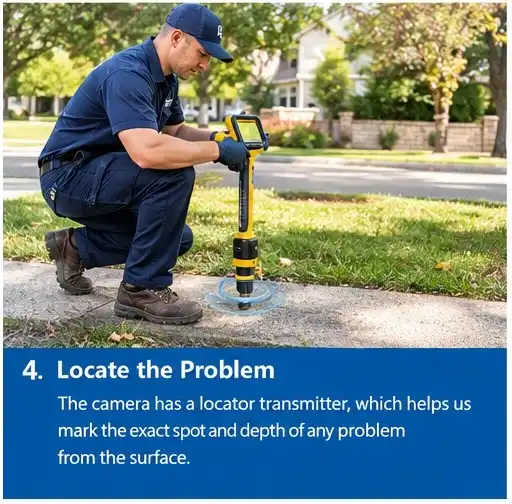
The camera’s locator signal lets us mark the exact location and depth on your property.
5. Review the footage with you.
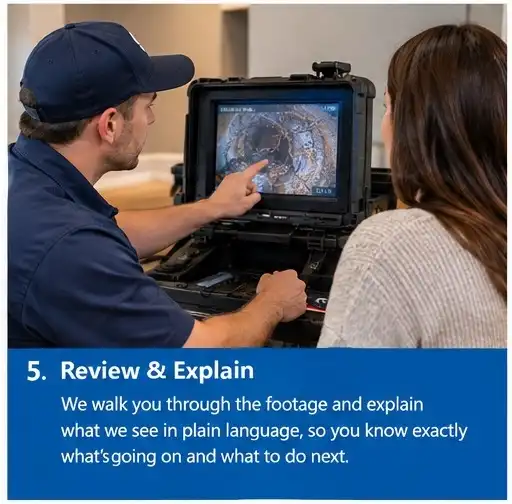
We show you the video and explain what matters and what doesn’t. No jargon, no pressure.
6. Recommend a clear plan.
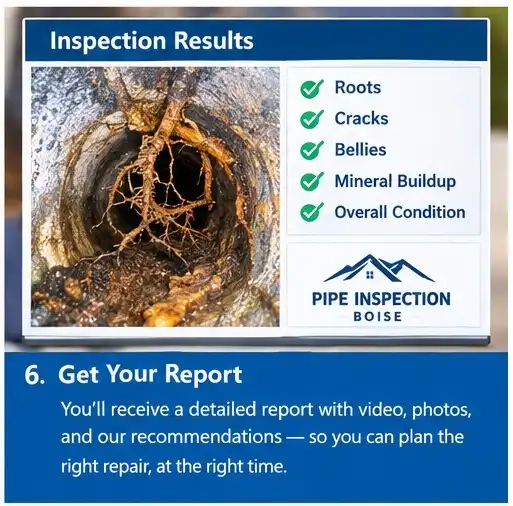
Options may include professional drain cleaning, hydro jetting, spot repair, trenchless lining, or simply monitoring a minor issue.
7. Provide a written summary.
You get documentation you can use for home sales, insurance, or future planning.
How to Prepare for Your Appointment
- Clear the area around any known cleanouts (garage shelves, landscaping, snow).
- Note your symptoms, including when they started and which fixtures are affected.
- Avoid chemical drain cleaners for 24 hours beforehand. They can harm older pipes and cloud camera footage.
- Gather home records if you have them, such as past repairs or the home’s build year.
Cost Comparison: Inspection vs. Surprise Repairs
A pipe inspection typically costs a fraction of what a surprise failure runs. The numbers below reflect typical Treasure Valley ranges as of 2026. Actual pricing depends on line length, access, and pipe condition, and we always quote before work begins.
| Service | Typical Boise-Area Cost | Notes |
|---|---|---|
| Sewer camera inspection | $150-$400 | Often less when bundled with drain cleaning |
| Standard drain snaking | $150-$350 | Temporary fix if roots or damage exist |
| Hydro jetting | $350-$800 | Clears roots, grease, and scale more fully |
| Spot repair (single section) | $1,000-$4,000 | Targeted fix at one damaged joint or crack |
| Trenchless pipe lining | $4,000-$15,000 | No trench; new pipe formed inside the old one |
| Full sewer line replacement | $5,000-$20,000+ | Depends on length, depth, and driveway/street work |
| Water damage cleanup (backup) | $3,000-$10,000+ | Plus flooring, drywall, and possible health risks |
Here’s the real math: we’ve seen homeowners quoted full replacement when a camera showed one root-damaged joint that needed a spot repair under $2,000. Seeing inside the pipe first protects you from overpaying and from underfixing.
Pipe Material Lifespans: What’s Under Your Home?
Knowing your pipe material helps you plan ahead. Use the table below alongside your home’s build year to estimate where your system stands.
| Pipe Material | Common Use | Typical Lifespan | Common Boise Problems |
|---|---|---|---|
| Vitrified clay | Sewer lines (pre-1970s) | 50-60+ years | Root intrusion at joints, cracking |
| Cast iron | Drains and sewer (pre-1975) | 75-100 years | Interior corrosion, scaling, cracks |
| Orangeburg | Sewer (1940s-1970s) | 30-50 years | Deforming, collapse; replace on sight |
| Galvanized steel | Water supply (pre-1960s) | 40-50 years | Rust, low pressure, discolored water |
| Copper | Water supply | 50-70 years | Pinhole leaks, hard water wear |
| ABS plastic | Drains and sewer (1970s+) | 50-80 years | Joint separation, sun or chemical damage |
| PVC | Drains and sewer (modern) | 70-100+ years | Offsets from soil movement |
| PEX | Water supply (modern) | 40-50+ years | Freeze damage at fittings, UV exposure |
If your home was built before 1975 and has never been scoped, you’re likely overdue.
When to Schedule an Inspection
You don’t need to wait for a backup. The smartest time to schedule a pipe inspection is before something forces your hand. Here’s how often we recommend it for common Boise situations.
| Situation | Recommended Frequency |
|---|---|
| Home older than 25 years | Every 1-2 years |
| Home with large trees near the sewer line | Every 1-2 years |
| Newer home (under 15 years), no issues | Every 3-5 years |
| Buying any home | Before closing, every time |
| Selling your home | Before listing |
| Recurring clogs or backups | Now, before the next cleaning |
| Before a bathroom or kitchen remodel | Before demolition starts |
| After a hard freeze or ground settling | As soon as symptoms appear |
Why Buyers Should Never Skip It
A standard home inspection doesn’t include a sewer scope. The main line from the house to the street is usually the homeowner’s responsibility, and replacement can top $15,000. A camera inspection before closing gives you negotiating power or the confidence to walk away. That short appointment protects what’s likely your largest purchase.
Repair vs. Replace: Making the Right Call
The pipe inspection footage drives this decision. We don’t guess, and we don’t push replacement when a targeted repair will do. Here’s how we weigh the options.
| Factor | Repair Makes Sense | Replacement Makes Sense |
|---|---|---|
| Damage extent | One or two isolated spots | Damage along much of the line |
| Pipe material | PVC, ABS, or sound cast iron | Orangeburg, badly corroded cast iron, failing clay |
| Pipe age | Well within expected lifespan | At or past expected lifespan |
| Root intrusion | Single joint, minor growth | Multiple joints, recurring after treatment |
| Bellies or offsets | Minor, short sections | Long sags or severe misalignment |
| Repair history | First repair | Third or fourth repair in a few years |
| Long-term cost | Lower upfront, good value | Higher upfront, eliminates repeat calls |
Spot Repair: Pros and Cons
Pros:
- Lower upfront cost
- Faster completion, often in one day
- Minimal yard disruption
Cons:
- Other aging sections may fail later
- Not practical for widespread damage
Trenchless Lining or Replacement: Pros and Cons
Pros:
- Decades of reliable service
- Stops root intrusion at joints
- Trenchless options protect landscaping and driveways
Cons:
- Higher initial investment
- Not every line qualifies (severe collapses may need excavation)
Boise Permit Requirements for Plumbing Work
Many homeowners don’t realize that most pipe repairs require a permit in Boise. Permits create a permanent record of the work and inspections, which matters when you sell or insure your home. According to the City of Boise Homeowner’s Guide to Residential Construction, here’s what applies to plumbing projects.
| Project | Permit Required? | Notes |
|---|---|---|
| Repair, replace, or relocate piping in your home | Yes | Plumbing permit |
| Replumbing pipes | Yes | Plumbing permit |
| Installing or replacing a water heater | Yes | Includes tankless units |
| Installing new fixtures (toilets, sinks, tubs) | Yes | Plumbing permit |
| Replacing fixtures with concealed plumbing work | Yes | Common in bathroom remodels |
| Excavating 10+ cubic yards of earth | Yes | Erosion and sediment control (ESC) permit |
| Camera inspection only | No | Diagnostic work doesn’t require a permit |
Who Can Do the Work?
- Homeowners may do plumbing work on their primary residence, but they must pull the permit and physically do the work themselves.
- If someone else does the work, they must be a State of Idaho licensed plumbing contractor.
- At Plumber Service Boise, we handle permits for the work we perform. You won’t have to navigate the paperwork alone.
Homeowner Checklist Between Inspections
Good habits stretch the time between problems. The EPA’s WaterSense program estimates that household leaks can waste nearly 10,000 gallons a year in the average home. Most of those leaks are easy to catch if you know where to look.
Monthly:
- Check under sinks for drips, stains, or musty smells.
- Watch for slow drains in more than one fixture.
- Look at your water meter with all fixtures off. If it moves, you likely have a hidden leak.
Seasonally:
- Disconnect garden hoses and shut off exterior spigots before the first freeze.
- Insulate crawlspace pipes and any lines along exterior walls.
- Flush your water heater to clear hard water sediment.
Always:
- Keep grease, wipes, and coffee grounds out of drains.
- Skip chemical drain cleaners, which eat at older pipes.
- Know where your main water shutoff is before you need it.
Small habits like these don’t replace an inspection, but they do buy you time.
FAQs
How long does a pipe inspection take?
Most residential sewer scopes take 45 minutes to 90 minutes. Longer lines, hard-to-reach cleanouts, or heavy blockages that need clearing first can add time. We’ll give you an estimate before we start.
Will you need to dig up my yard?
Almost never. We access the line through an existing cleanout or a fixture. Digging only happens if a repair requires it, and many repairs can be done with trenchless methods. If we find damage, our pipe repair team will explain every option before any shovel hits the ground.
Can a camera find leaks in my water supply lines?
Cameras work best in drain and sewer lines. For pressurized supply lines, we use acoustic leak detection and pressure testing. Often we combine both methods for a complete picture of your system.
Does hard water affect my water heater, too?
Yes, significantly. Boise’s mineral-heavy water builds sediment in tank heaters and scale in tankless units. If you’re weighing an upgrade, our guide on tankless water heater installation compares both options for Treasure Valley homes. Annual flushing and a water softener extend the life of either type.
Is a camera inspection worth it on a newer home?
Often, yes. New construction can have construction debris in the line, poorly glued joints, or settling offsets. A baseline scope gives you a reference point for future comparisons. We’ve found concrete chunks in lines less than five years old.
What happens if you find a problem?
We show you the footage, mark the location, and give you clear options with upfront pricing. Some findings just need monitoring. Others need prompt action. You decide what’s right for your home and budget.
See the Problem Before It Finds You
Your pipes work hard every day in conditions most homeowners never think about. Hard water, hungry tree roots, aging materials, and Idaho’s freeze-thaw cycles all wear them down quietly. A professional pipe inspection turns that uncertainty into a clear, documented plan. You’ll know exactly what’s happening underground, what it will cost to fix, and how urgent it really is.
The best plumbing repair is the one you schedule on your own terms. Pair a camera inspection with regular Plumbing Remodeling, and you’ll catch most problems long before they become emergencies.
At Plumber Service Boise, we serve Boise, Meridian, Eagle, Nampa, Caldwell, and communities across the Treasure Valley. We offer transparent pricing, honest recommendations, and 24/7 availability when you need us most. Call us today to schedule your inspection.
Have you ever dealt with a surprise sewer backup? Tell us what the warning signs looked like in your home.