
Your septic tank works quietly until it fails, and then it fails loudly. A full tank pushes solids into your drain field, and that turns a routine service into a five-figure repair. Planning your septic tank emptying Banbury schedule is one of the cheapest ways to protect your property value.
Plumber Service Boise, our septic pumping service keeps homes across Two Rivers/Banbury, Eagle, and Meridian draining the way they should. Here is exactly what you need to know before your next pump-out.
Key Takeaways
- Most homes need emptying every 3 to 5 years, but household size and tank capacity can shorten that window to 1 or 2 years.
- Routine pumping costs a few hundred dollars. A failed drain field can cost $5,000 to $20,000 or more to repair or replace.
- Schedule service in late summer or fall. Frozen ground in Treasure Valley winters makes tank access harder and emergency calls pricier.
Why Septic Care Matters So Much in Two Rivers/Banbury
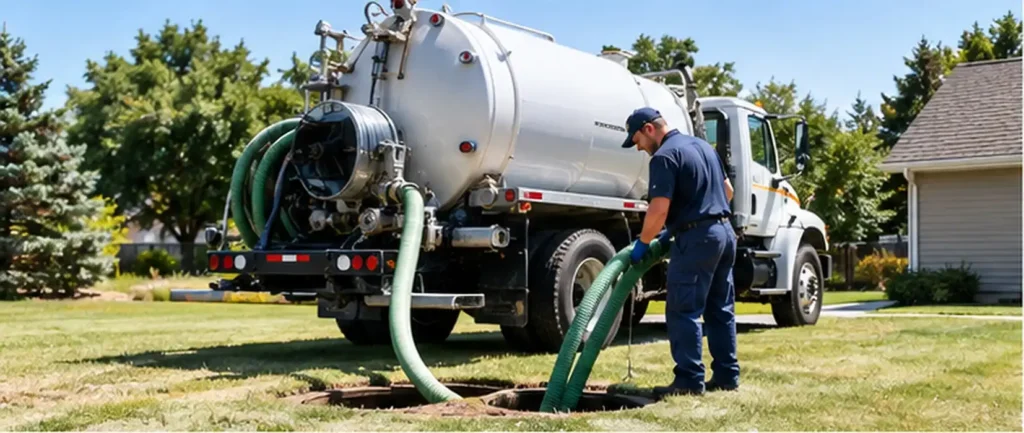
Many homes near the Boise River sit on larger lots with private septic systems. Some neighborhoods also have a higher seasonal water table. That puts extra pressure on your drain field, especially during spring runoff. A tank that is overdue for pumping has less room for error here.
Our plumbers frequently see this pattern:
- Older acreage homes with tanks that have not been located or pumped in a decade
- Buried lids with no risers, which adds labor time to every visit
- Growing families using a tank that was sized for fewer people
- Garbage disposal use that doubles the speed of sludge buildup
If you’ve dealt with frozen pipes in Idaho, you already know that winter turns small problems into big ones. Septic systems follow the same rule.
How Septic Tank Emptying Works
Good septic tank emptying Banbury service is more than hooking up a hose. A proper visit includes locating, measuring, pumping, and inspecting. Skipping the inspection step is where many cheap jobs fall short.
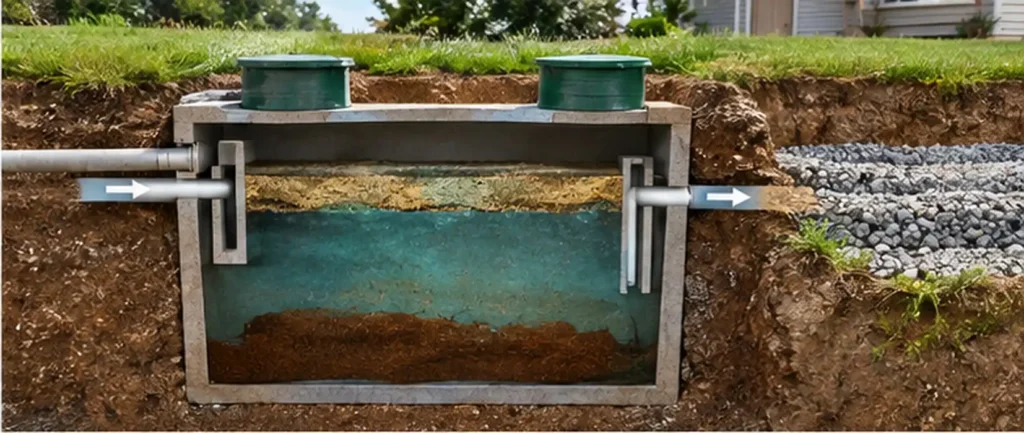
Here is the process our crews follow on every call:
- Locate the tank. We use property records, probing rods, or electronic locators for older systems.
- Expose the access lids. We dig to the lids or open existing risers. Risers save time and money on future visits.
- Measure sludge and scum layers. This tells us how fast your tank fills and whether your pumping interval needs adjusting.
- Pump the tank completely. Our vacuum truck removes liquids, floating scum, and settled sludge.
- Break up compacted sludge. We backwash and agitate stubborn layers so nothing is left behind.
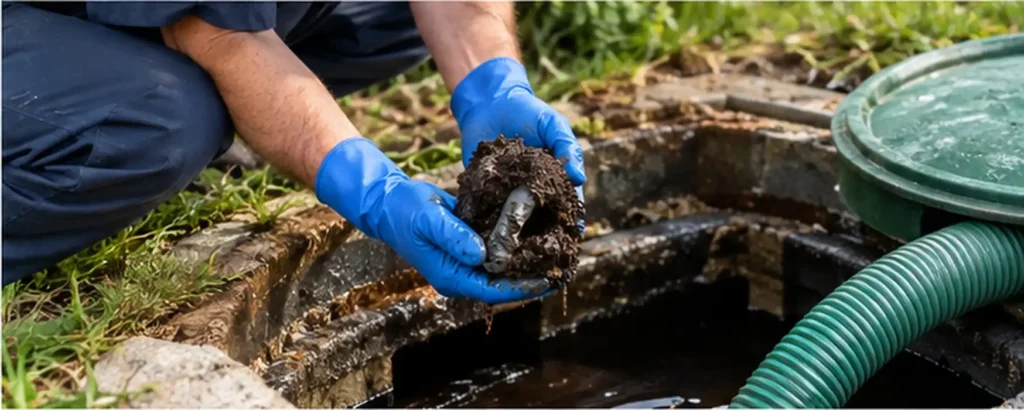
- Inspect the baffles. Damaged inlet or outlet baffles let solids escape into the drain field.
- Check for cracks, roots, and leaks. We look at tank walls, seams, and pipe connections.
- Clean the effluent filter. If your tank has one, a clogged effluent filter can cause backups even after pumping.
- Record everything. You get notes on tank condition, sludge depth, and a recommended next service date.
- Haul waste legally. Waste goes to an approved treatment facility, never a field or ditch.
What a Typical Visit Looks Like
| Service Step | Typical Time | Why It Matters |
|---|---|---|
| Locating the tank | 15 to 60 minutes | Unknown locations add labor costs |
| Digging to lids | 15 to 45 minutes | Risers can cut this to zero |
| Pumping (1,000 gal tank) | 20 to 40 minutes | Larger tanks take longer |
| Baffle and tank inspection | 10 to 20 minutes | Catches problems before they spread |
| Paperwork and recommendations | 5 to 10 minutes | Builds your maintenance record |
Warning Signs Your Tank Needs Emptying
Your system usually gives clear warning signs before it fails. The trick is noticing them early. On recent service calls in Meridian, we found that most emergency backups followed weeks of ignored symptoms. Call us at the first sign, not the third.

Watch for these red flags:
- Slow drains in multiple sinks, tubs, or showers at once
- Gurgling sounds in toilets or drains after flushing
- Sewage odors inside the house or near the tank area
- Soggy, spongy ground over the drain field when it has not rained
- Unusually green grass growing in strips over the drain lines
- Toilets that flush weakly or back up repeatedly
- Sewage backing up into the lowest drain in the house
- High-water alarms sounding on systems with pumps
- Standing water near the tank lid or drain field
- More than 3 years since your last professional pump-out
A single slow drain may just be a clog. If only one fixture is acting up, professional drain cleaning may solve it without touching the tank. When several fixtures slow down together, the tank is the more likely culprit. That is when septic tank emptying Banbury homeowners rely on should move to the top of your list.
Clog or Full Tank? A Quick Comparison
| Symptom | Likely a Local Clog | Likely a Full Tank |
|---|---|---|
| One slow sink | ✅ | |
| All drains slow at once | ✅ | |
| Gurgling in multiple fixtures | ✅ | |
| Odor near one drain only | ✅ | |
| Odor in the yard | ✅ | |
| Wet spots over drain field | ✅ | |
| Backup after heavy laundry day | ✅ |
Pumping Frequency Guide
There is no single schedule for every home. Tank size, household size, and water habits all change the math. National guidance recommends inspection every 1 to 3 years and pumping every 3 to 5 years for typical homes. Your real number depends on what we measure inside your tank.
The table below gives estimated pumping intervals based on widely used industry sizing data. Use it as a starting point, not a rule.
| Household Size | 750 Gal Tank | 1,000 Gal Tank | 1,250 Gal Tank | 1,500 Gal Tank |
|---|---|---|---|---|
| 1 person | 5+ years | 5+ years | 5+ years | 5+ years |
| 2 people | 4 years | 5 years | 5+ years | 5+ years |
| 3 people | 2.5 years | 3.5 years | 4.5 years | 5 years |
| 4 people | 2 years | 2.5 years | 3.5 years | 4 years |
| 5 people | 1.5 years | 2 years | 2.5 years | 3 years |
| 6 people | 1 year | 1.5 years | 2 years | 2.5 years |
Factors That Shorten Your Interval
| Factor | Impact on Interval | Our Recommendation |
|---|---|---|
| Garbage disposal use | Can cut interval by up to 50% | Compost food scraps instead |
| Frequent guests or rentals | Adds unplanned load | Pump before peak seasons |
| Water softener backwash | Adds volume and salt | Ask us about routing options |
| Home business (salon, daycare) | Heavy daily flow | Inspect yearly |
| Older, undersized tank | Fills faster | Consider an upgrade |
Seasonal tip for Idaho homes: Book your septic tank emptying Banbury appointment between August and October. The ground is dry and soft. Our trucks avoid ruts in wet lawns, and you skip the risk of a frozen-ground emergency in January.
Cost Comparison: Routine Emptying vs. Emergency Pumping vs. Drain Field Repair

At Plumber Service Boise, we believe in transparent pricing. The numbers below reflect typical Treasure Valley ranges for 2026. Your final price depends on tank size, access, and condition. We always give you the quote before we start the work.
| Service Type | Typical Cost Range | When You Need It | Downtime |
|---|---|---|---|
| Routine pumping (1,000 gal) | $350 to $650 | Every 3 to 5 years | A few hours |
| Routine pumping (1,500 gal) | $450 to $800 | Every 3 to 5 years | A few hours |
| Locating and digging to lids | $100 to $300 extra | If no risers exist | Adds 30 to 90 minutes |
| Riser installation | $300 to $900 | One-time upgrade | Same day |
| After-hours emergency pumping | $650 to $1,200+ | Backups, overflows | Varies |
| Baffle repair or replacement | $250 to $700 | Damaged baffles found | Same day in most cases |
| Drain field repair | $3,000 to $10,000 | Partial field failure | Days to weeks |
| Full drain field replacement | $8,000 to $20,000+ | Total field failure | Weeks, plus permits |
| Complete septic system replacement | $12,000 to $30,000+ | Tank and field failure | Weeks, plus permits |
The Real Cost of Waiting
| Scenario | 15-Year Cost Estimate |
|---|---|
| Pump every 3 to 4 years (4 visits) | $1,600 to $2,600 |
| Skip pumping, then replace drain field | $8,000 to $20,000+ |
| Skip pumping, emergency call plus field repair | $4,000 to $11,000+ |
The math is simple. Routine septic tank emptying Banbury homeowners schedule on time costs a fraction of one drain field failure.
Regulatory Compliance: EPA SepticSmart and Environment Agency General Binding Rules
Septic rules depend on where your property actually is. We get calls from homeowners who searched online and found information meant for Banbury, England, not Banbury in Idaho. Here is how to tell which rules apply to you.
U.S. Guidance: EPA SepticSmart
The EPA’s SepticSmart program is the national education effort for homeowners. It promotes regular inspection, routine pumping, and smart water use. SepticSmart Week ran September 14 to 18, 2026, marking the program’s 14th anniversary.
For Idaho homes, day-to-day oversight comes from state and local agencies:
- Idaho Department of Environmental Quality (DEQ) sets statewide septic rules.
- Central District Health handles septic permits in Ada County, including Boise, Meridian, and Eagle.
- Southwest District Health covers Canyon County, including Nampa and Caldwell.
- Licensed pumpers must haul waste to approved disposal sites.
UK Guidance: Environment Agency General Binding Rules
If your property is in Banbury, Oxfordshire, the Environment Agency’s General Binding Rules for small sewage discharges apply. These rules are stricter in several ways. They are worth knowing even for U.S. owners, because they show where best practices are heading.
Side-by-Side Comparison
| Topic | Idaho (Treasure Valley) | England (Banbury, Oxfordshire) |
|---|---|---|
| Main authority | Idaho DEQ and local health districts | Environment Agency |
| Recommended emptying | Every 3 to 5 years (typical) | At least once a year, or per manufacturer for treatment plants |
| Waste hauler requirement | Licensed pumper, approved disposal | Registered waste carrier with certificate |
| Discharge to surface water | Not permitted for standard septic | Septic tanks discharging to watercourses must be upgraded |
| Daily volume limit for exemption | Set by permit and system design | 5 cubic meters (5,000 liters) per day |
| Disclosure when selling | Recommended inspection; lender rules vary | Seller must tell buyer in writing |
| Maintenance standard | Follow permit and design specs | Must use a competent person; repair any faults |
What This Means for Your Idaho Home
- Keep written records of every pump-out and repair.
- Ask your pumper where the waste is taken.
- Get an inspection before buying or selling a home on septic.
- Never connect sump pumps or roof drains to your septic system.
Repair vs. Replace: Making the Right Call
Not every problem means a new tank. Many issues are fixable for a few hundred dollars. Others signal that replacement is the smarter long-term investment. We will always tell you which category you’re in, honestly.
| Key Metric | Repair Makes Sense | Replace Makes Sense |
|---|---|---|
| Tank age (concrete) | Under 30 years | 40+ years |
| Tank age (steel) | Under 15 years | 20+ years (steel rusts out) |
| Tank age (plastic or fiberglass) | Under 25 years | 30+ years |
| Crack severity | Hairline, above the waterline | Structural, below the waterline, or leaking |
| Baffle condition | One damaged baffle | Both baffles gone plus tank damage |
| Drain field status | Slow but absorbing | Saturated, surfacing effluent |
| Repair cost vs. replacement | Under 30% of replacement | Over 50% of replacement |
| Lifespan remaining | 10+ years | Under 5 years |
| Household needs | Same size household | Added bedrooms or residents |
Typical Lifespans by Material
| Tank Material | Expected Lifespan | Common Failure Points |
|---|---|---|
| Concrete | 40 years or more | Cracks, baffle erosion |
| Steel | 15 to 20 years | Rust, collapsed lids |
| Fiberglass | 30 years or more | Shifting in high groundwater |
| Polyethylene (plastic) | 30 years or more | Deformation from soil pressure |
Our plumbers frequently see old steel tanks on acreage properties around the valley. Many have rusted lids that are a real safety hazard. If your home was built before the 1980s, ask us to confirm your tank material during your next septic tank emptying Banbury visit.
Maintenance Checklist for Treasure Valley Septic Owners
Small habits protect your system between visits. Print this list and stick it on the fridge. Your drain field will thank you.
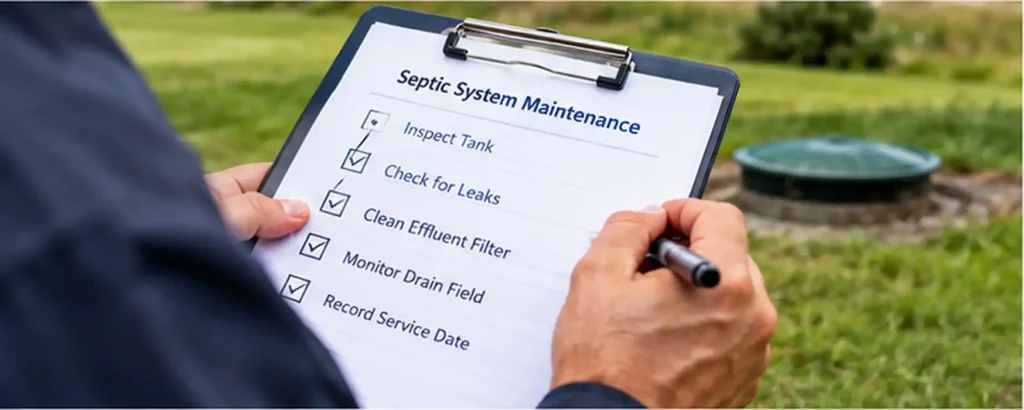
Daily and Weekly Habits
- Flush only toilet paper and human waste
- Skip “flushable” wipes, which do not break down in tanks
- Keep grease and cooking oil out of every drain
- Spread out laundry loads across the week
- Fix running toilets and dripping faucets quickly
- Limit harsh chemicals like drain cleaners and bleach
Seasonal Tasks
- Late summer: Schedule pumping before the ground freezes
- Fall: Clear leaves and debris from tank lids and risers
- Winter: Keep vehicles and heavy snow piles off the drain field
- Winter: Add mulch or let grass grow longer over lines for insulation
- Spring: Watch for soggy ground during runoff season
- Spring: Check that downspouts drain away from the field
Every 1 to 3 Years
- Professional inspection of tank, baffles, and filter
- Measure sludge and scum depth
- Clean the effluent filter if your tank has one
- Test alarms and pumps on advanced systems
Things to Avoid Completely
- Planting trees or shrubs within 30 feet of the drain field
- Building patios, sheds, or driveways over any system part
- Relying on additives in place of pumping
- Draining hot tubs or pools into the septic system
FAQs
How often should I schedule septic tank emptying Banbury homes need?
Most homes need pumping every 3 to 5 years. Larger families or homes with garbage disposals may need service every 1 to 2 years. We measure your sludge layer to set a schedule that fits your home.
What should I do if sewage backs up into my house?
Stop using water right away. Avoid flushing toilets and running appliances. Then call for emergency plumbing help. A backup can mean a full tank, a blocked line, or a failed pump, and fast action limits water damage and health risks.
Can a damaged sewer line cause the same symptoms as a full tank?
Yes. Root intrusion, cracked pipes, and sagging lines between the house and tank cause slow drains and gurgling. If your tank checks out fine, our team can handle the pipe repair your system needs. We often use a camera inspection to find the exact problem spot.
Do septic additives replace the need for pumping?
No. Most additives do not remove solids. Some can even stir up sludge and push it into your drain field. Your tank already has the bacteria it needs from normal use.
Is it safe to pump my septic tank in winter?
It can be done, but it costs more and takes longer. Frozen ground makes digging difficult. Snow can hide lids and risers. That is why we recommend fall service for most Idaho homeowners.
Final Thoughts
Your septic system is one of the most expensive components of your property. It is also one of the easiest to protect. Regular pumping, smart water habits, and early action on warning signs prevent the vast majority of failures we see. Most septic disasters start as small, cheap fixes that someone put off.
Here is your action plan:
- Find your last pump-out date. If it’s been 3 years or more, book a visit.
- Install risers if your lids are buried. You will save on every future service.
- Keep records of every visit, repair, and inspection.
- Book fall service to stay ahead of Idaho’s freezing winters.
Buying or selling a home in Two Rivers/Banbury, Eagle, Meridian, Nampa, or Caldwell? Our septic inspections give you a clear picture of the tank, baffles, and drain field before you close.
At Plumber Service Boise, we explain everything in plain language, quote honest prices upfront, and treat your yard with care. When it’s time for septic tank emptying Banbury homeowners can trust, our team is ready to help across the entire Treasure Valley.